If you’ve ever worked with fasteners in automotive assembly, aerospace component manufacturing, or heavy machinery repair, chances are you’ve come across unequal length double end studs. These specialty fasteners—with threaded lengths cut to different dimensions on each end—solve a ton of problems that standard studs or bolts can’t: they let you align two mating components perfectly, account for material thickness differences, and reduce the risk of over-tightening or cross-threading that comes with off-the-shelf hardware. But over the years, I’ve fielded a question so often from engineers, maintenance techs, and even fellow fastener suppliers that I’ve started to think it’s one of the most persistent myths about our products: Are unequal length double end studs magnetic? Unequal Length Double End Studs

Let me cut to the chase, because this is one of those questions that sounds simple enough, but unravels into something that depends on way more than just the stud’s unequal length design. When someone asks if a fastener is magnetic, they’re almost always talking about ferromagnetic properties—the ability to attract to a magnet, which comes from the crystal structure of the metal it’s made from, not whether one end is an inch longer than the other. But I’ve watched this question spiral into confusion more times than I can count, especially because the same studs that work perfectly in a non-magnetic food-processing conveyor might be exactly what you need for a magnetic automotive engine bracket, where their material properties matter more than their unequal length design.
Let’s start with the basics of what unequal length double end studs actually are, for anyone who might be newer to these parts. Unlike a standard double end stud, where both threaded sections are identical in length, unequal length studs are precision-cut so one thread end is shorter or longer than the other. For example, a common part we supply for diesel engine exhaust manifolds has one 1/2-inch thread end that screws into the engine block, and a 1-inch thread end that holds the exhaust flange. That extra length on the flange end lets you slip gaskets and washers into place without the stud bottoming out before the manifold sits flush, which is a tiny but critical detail that prevents exhaust leaks and engine damage. Another popular use is in furniture assembly, where one end might fasten to a wooden frame and the other to a metal plate, each tailored to the material’s thickness. So the unequal length part is just a functional design tweak—nothing that changes the core material makeup of the stud itself.
Now, back to magnetism. Let’s break down how metal magnetism works for fasteners. The vast majority of studs (including unequal length ones) are made from steel, because steel is strong, durable, and cost-effective for most industrial applications. But steel isn’t a single material—there are dozens of steel grades, each with different chemical compositions and properties. Carbon steel, for example, is the most common fastener steel, and almost all carbon steel is ferromagnetic. That means it will attract to a standard refrigerator magnet, because its iron content forms a crystal structure that aligns with magnetic fields. But not all steel is magnetic. Stainless steel, for instance, comes in different series: 300-series stainless (like 304 or 316) is austenitic, which has a crystal structure that doesn’t align with magnetic fields, so it’s non-magnetic. 400-series stainless, though, is ferritic or martensitic, so it is magnetic, even though it’s still stainless steel.
Here’s where the myth of “unequal length studs being magnetic” comes from, I think. For years, most of the unequal length double end studs I supplied were made from carbon steel, so every single example we sent out was magnetic. A mechanic would order a set of studs for an engine build, test them with a magnet to make sure they were the right hardness (magnetism is actually a quick, rough way to check for steel grade, even if it’s not 100% accurate), and assume that the unequal length part was the reason for the magnetism. When an engineer later ordered non-magnetic unequal length studs for a medical device assembly, and the parts didn’t stick to a magnet, they might come back confused—“Wait, aren’t these supposed to be magnetic?” No, because the unequal length design has nothing to do with magnetism. The material is.
I learned this the hard way about eight years ago, when a customer from a high-tech bike component manufacturer called me in a panic. They were building a new carbon fiber frame that used unequal length double end studs to attach the rear swingarm, and their quality control team had rejected a whole shipment because the studs stuck to their manufacturing equipment’s magnetic sensors. They thought we had sent the wrong studs, like we’d accidentally mixed in steel instead of the non-magnetic 316 stainless they’d specified. When I pulled up our order logs, I saw they’d requested unequal length studs made from 316 stainless—material that’s explicitly non-magnetic. We packed the order correctly, but somewhere in the heat treatment process at our subcontractor, there had been a mix-up: a batch of 400-series magnetic stainless had run through the same line as the 316. That story stuck with me, because it drove home a key point I still try to drill into every customer I talk to: the length of the stud doesn’t determine its magnetism. The material it’s made from, and the manufacturing processes it goes through, do.
Let’s get into the details that matter for anyone selecting these studs, because magnetism isn’t just a trivia question—it’s a critical functional property for many applications. If you’re working on a magnetic resonance imaging (MRI) machine component, even a tiny magnetic piece of hardware can interfere with the scanner and create a safety hazard. For that use, you need non-magnetic unequal length double end studs, almost always made from 300-series stainless or titanium, neither of which are ferromagnetic. On the flip side, if you’re building a electric motor, magnetic studs are actually beneficial—they can help ground components, reduce vibration from loose hardware, and hold fasteners in place during assembly, so carbon steel or 400-series stainless studs are perfect for that job.
Another common point of confusion is heat treatment, which is a standard step in making fasteners harder and more durable. Sometimes, heating a non-magnetic steel can alter its crystal structure, making it slightly magnetic. For example, 316 stainless is usually non-magnetic, but if it’s heated to a very high temperature (like during welding or heat treatment) and then cooled quickly, it can develop some martensite, a magnetic phase. That’s not a flaw in the stud—it’s a result of how the metal behaves when heated, and it’s a good thing to mention when you’re ordering. I always tell customers: if non-magnetism is non-negotiable for your application, ask about the material’s heat treatment history, and we can specify additional processing to keep it non-magnetic, like cryogenic treatments that eliminate any residual magnetic phases.
I’ve also had people ask if the unequal length of the stud causes any uneven magnetic properties, like one end being more magnetic than the other. That’s impossible, by the way. When we cut a double end stud to unequal lengths, we’re just trimming the ends of a solid rod of metal. The entire stud has the same chemical composition throughout, same grain structure, same heat treatment. Both ends have exactly the same magnetic properties, because they’re part of the same piece of metal. I’ve tested this dozens of times over the years—take a carbon steel unequal length stud, run a magnet along the short end, then the long end, and they stick equally well. The same goes for non-magnetic studs; neither end will attract a magnet. The only way you’d see a difference is if the stud was damaged, corroded, or coated differently on one end, none of which have anything to do with its unequal length design.
Let me share a recent example that illustrates how this question plays out in real-world work, from a customer I worked with last year. A team at a wind turbine manufacturer ordered 12,000 unequal length double end studs to mount generator stator components. They called me a week after delivery, saying half the studs stuck to their alignment tools, and were worried they’d have to scrap the whole lot. I asked them what material they’d ordered, and they said “standard steel.” Turns out, their alignment tools had strong magnets built in to hold small components in place, so the magnetic carbon steel studs were sticking when they weren’t supposed to. We explained that we could supply non-magnetic 316 stainless studs, adjusted for the same unequal length specs they needed, and offered a rush order so they wouldn’t miss their production deadline. That’s the kind of problem being able to explain the difference between a stud’s design and its material properties solves.
So, to wrap this up, let’s answer the original question clearly: No, unequal length double end studs are not inherently magnetic. Magnetism is a property of the material the stud is made from, its heat treatment, and any coating or processing it undergoes—not whether one end is longer than the other. That unequal length design is a functional feature, tailored to fit specific assembly needs, not a property that affects how the stud interacts with magnetic fields.
When you’re selecting these studs for your project, here’s what you need to consider instead of length when it comes to magnetism: First, confirm whether magnetism is a concern for your application. If you’re working with sensitive electronics, medical equipment, MRI machines, or any setup where magnetic interference could cause issues, you’ll need non-magnetic studs, typically made from austenitic stainless steel (304, 316) or titanium. If magnetism is beneficial, like for motors, engine components where you want to reduce hardware shift, or general construction, carbon steel or magnetic stainless steel will work perfectly. Second, always specify your material requirements and any magnetic constraints upfront when you order. A good supplier will clarify these details, and make sure your studs meet your exact needs, regardless of their unequal length.
If you’re not sure what kind of studs you need for your application—whether you’re building a new engine, assembling medical devices, or putting together heavy machinery—our team has years of experience working with unequal length double end studs for every kind of use case. We can walk you through material options, magnetism considerations, and custom specs to make sure you get the right parts for your project. Reach out to our team to discuss your requirements and get a personalized quote.
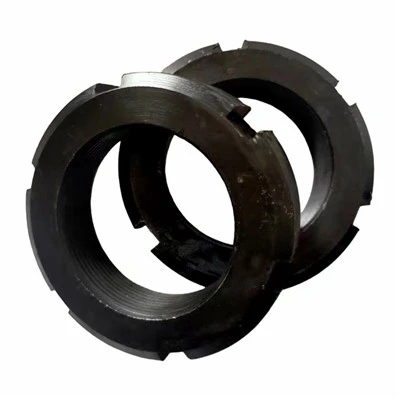
Nuts References
- Brandão, L., et al. (2019). Metallurgy of Fasteners: Material Selection, Properties, and Application. Journal of Industrial Fastening Technology.
- ASTM International. (2021). Standard Specification for Steel Studs, Double-Ended, Heat-Treated, and Non-Heat-Treated. ASTM A193/A193M.
- Cullity, B. D., & Graham, C. D. (2009). Introduction to Magnetic Materials (2nd ed.). Wiley-IEEE Press.
- ASM International. (2020). Stainless Steels: Properties and Applications. ASM Handbook, Volume 4: Materials Characterization.
Handan Jihao Fastener Co., Ltd.
We’re known as one of the most professional unequal length double end studs manufacturers and suppliers in China. With abundant experience, we warmly welcome you to wholesale customized unequal length double end studs made in China here from our factory. If you have any enquiry about cooperation, please feel free to email us.
Address: A2, Row 31, Feiyu Screw World, Hebei Pu, Linmengguan Town, Yongnian District, Handan City, Hebei Province
E-mail: wenzhaona0@gmail.com
WebSite: https://www.chinaboltnut.com/
