If you’ve ever stared at a pair of socks with grippy little dots on the bottom (you know, the ones that stop you from face-planting on hardwood floors or yoga mats), you’ve probably wondered how those tiny, perfectly spaced dots get there. As a guy who’s been working as a socks dotting machine supplier for over 8 years, I get asked this question all the time—usually by sock brand owners, small batch makers, or even DIY folks who’re trying to level up their custom designs. Most people assume it’s some weird, fancy high-tech thing that costs a fortune and requires a PhD to run. Nah, it’s way more straightforward than that. Let me break it down like I would for a new customer who just sent me a “how does this even work?” DM. Socks Dotting Machine

First off, let’s get one thing straight: socks dotting machines aren’t just one single thing. There are a few main types, depending on what kind of socks you’re making, how many dots you need, and how big your order is. The three most common ones I sell are rotary dotters, automatic flatbed dotters, and manual tabletop dotters (for tiny batches, like 50 pairs or less). But no matter which one you go with, the core process is the same: you take a clean, pre-made sock (usually cotton, polyester, or a blend—synthetic stuff works better for grip, but cotton’s fine for casual socks), lay it flat, and apply tiny, precise dots of grippy material right where they need to be.
Let’s start with the most popular one for mid-sized sock brands—rotary dotters. These are the workhorses of the industry, right? If you’ve ever ordered a bulk batch of non-slip socks for hospitals or dog walkers, chances are those came off a rotary machine. Here’s how it works step by step. First, the sock is loaded onto a “form”—that’s basically a plastic mold shaped like a foot, right? You stretch the sock over the form so it’s totally flat, no bunching, and the bottom of the sock is facing up. Why a form? Because if the sock’s wavy or twisted, the dots will be uneven, and no one wants socks that slide on one side and stick on the other. I always tell new buyers, if you skip the form, you’re wasting material. Simple as that.
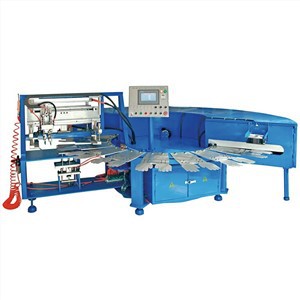
Next, the form with the sock slides into the machine, which is basically a big, rotating wheel with dozens of small, individual nozzles attached around its edge. This is the “rotary” part. Those nozzles are hooked up to a pump that’s calibrated to squeeze out exactly the same amount of grip material every single time—no more, no less. The material used? Most of the time it’s a food-grade silicone rubber, because it’s flexible, non-toxic, and doesn’t peel off after a dozen washes. Sometimes brands use polyurethane (PU) for extra tough, heavy-duty socks, like work socks for construction sites. But silicone is the workhorse, so that’s what most people go for.
Now, the part that makes the dots perfectly spaced: the machine has a stencil plate, or a pattern template, that’s positioned right under the rotating wheel of nozzles. The template is cut with little holes exactly where you want the dots—like 3 dots per toe, 5 across the ball of the foot, and 4 along the heel, for example. As the wheel spins, each nozzle lines up with a hole in the template, and the pump fires just for a split second, pushing a tiny blob of grip material through the hole and onto the sock. Once all the dots are applied, the form slides out of the machine, and the sock goes into a drying oven. The oven is set to like 120-150 degrees Fahrenheit, which cures the silicone so it’s hard enough to grip but still soft enough not to be uncomfortable on the foot. That’s it for a rotary machine—one form takes like 10 seconds, so you can crank out 2,000 pairs an hour, easy.
Wait, but what if you don’t need 2,000 pairs an hour? Or if you want custom dot patterns that aren’t a standard grid? That’s where automatic flatbed dotters come in. These are bigger than tabletop models but smaller than rotary ones, perfect for brands that do custom orders, like wedding socks with the bride’s name in tiny dots, or kids’ socks with animal prints made of dots. Flatbed dotters work a little differently—instead of a rotating wheel, they have a movable print head, like the one in your home inkjet printer, but way more precise. The print head moves back and forth over the flat sock (wait, no, they still use a form, just a flatter one), and it has individual nozzles that fire on command, kind of like a 3D printer for tiny dots.
The cool thing about flatbed dotters is that they can do super complex patterns. If you want a tiny heart on the heel, or stripes made of alternating colored dots (yeah, you can get colored silicone now!), you just upload the design to the machine’s computer, and it does all the work. No need to swap stencils or anything. That’s a huge plus for small brands that don’t want to buy 10 different stencils for different designs. The downside? They’re a little slower than rotary machines, like 500-1,000 pairs an hour, which is still way faster than doing it by hand.
Speaking of doing it by hand—let’s not sleep on manual tabletop dotters. These are for hobbyists, Etsy sellers, or people who just want to make custom socks for their family. A manual dotter is basically a small, handheld tool with a plunger that you press to squeeze out silicone, and a stencil that you hold over the sock. It’s like using a super precise glue gun, but for grip dots. Do I recommend this for full-time businesses? Nah, because it’s slow (you’re lucky to do 20 pairs an hour) and inconsistent—some dots will be too big, some too small, and you’ll get silicone on your fingers. But it’s great if you just want to test a product or make a few pairs for fun.
Now, let’s talk about the parts that go into these machines, because that’s what I actually care about as a supplier. I don’t just sell a hunk of metal and plastic to someone and walk away. The nozzles, for example, are the most important part. If a nozzle is even a little clogged, you get a missing dot, and that’s a defective sock. That’s why I only use stainless steel nozzles—they don’t clog easily, and they last way longer than plastic ones. The pumps, too—peristaltic pumps, specifically. Those are pumps that squeeze a flexible tube to move the silicone, so you don’t have to worry about the material getting contaminated with metal or other gunk. Super important for food-grade socks, by the way—hospitals and schools won’t touch socks with non-food-grade materials.
Wait, let’s also clear up a common myth: no, it’s not just glue. I’ve had customers ask me that, like, “Can’t I just use regular fabric glue to make grip dots?” Nope. Regular glue washes off after two or three washes, and it’s stiff, so it feels weird on the foot. Silicone is elastic, so it moves with the sock, and it’s bonded to the fabric so it doesn’t peel. It’s also slip-resistant even when it’s a little wet—perfect for socks you wear around the pool or the shower.
Another question I get: how thick are the dots? They’re usually like 1-2 millimeters thick, which is thick enough to grip but not so thick that you feel them through the sock. Some brands go thicker for heavy-duty work socks, like 3mm, but that’s less common for casual or medical socks.
Let me give you a real example of how this works in action, because I know stories are easier to follow than steps. Last year, I worked with a small brand in Portland that makes organic non-slip socks for newborns. They started with a manual dotter, but when they started getting orders from local hospitals, they needed more speed. We sold them a compact rotary dotter, and I helped them set up the stencil: 2 small dots under the ball of the foot, 3 tiny dots on each side of the heel, and a single dot on the toe (for baby socks, you don’t want too many big dots). The machine runs 8 hours a day for them, pumping out 1,200 pairs a day, which is exactly what they need. They told me their defect rate went from like 10% with manual to less than 1% with the machine. That’s the difference between scaling a business and staying tiny, right?
Now, if you’re thinking about buying a socks dotting machine, there are a few things to keep in mind, even if I’m the one selling them. First, figure out your order volume. If you’re making less than 100 pairs a month, a manual tabletop is fine. If you’re making 500+ a month, go for an automatic flatbed or rotary. Second, what kind of designs do you want? If you stick to standard grid patterns, rotary is cheaper and faster. If you do custom, complex designs, flatbed is worth the extra cost. Third, don’t skimp on nozzles and pumps. I’ve had customers come to me after buying a cheap machine from a no-name supplier, and their nozzles clog every other week, and the pumps break in 6 months. It’s not a deal if you have to fix it every week, trust me.
I get that buying a machine is a big investment, especially if you’re just starting out. That’s why I always offer free demos, flexible payment plans, and after-sales support—no one wants to be stuck with a machine they don’t know how to use, or that breaks and they have no one to call. At the end of the day, the socks dotting process is all about making a product that’s useful, safe, and consistent. No fancy magic, just precision engineering and good materials.
If you’re a sock brand owner looking to level up your non-slip line, or a maker who’s tired of hand-dotting every pair, hit me up to chat about what you need. I can walk you through different models, answer any questions about how they work, or even send you a sample of dots from the machine so you can feel the difference. Don’t overcomplicate it—sometimes the best way to scale your business is to get the right tool for the job, and a good socks dotting machine is that tool.
Socks Setting Machine References:
- Textile Machinery Association. (2022). “Guide to Non-Woven and Apparel Printing Machinery.”
- Silicone Rubber Manufacturers Association. (2021). “Food-Grade Silicone Applications in Textile Products.”
- Small Business Administration. (2023). “Scaling Custom Apparel Production for Small Businesses.”
Zhejiang Rongyifu Machinery Tech. Co., Ltd.
Zhejiang Rongyifu Machinery Tech. Co., Ltd. is well-known as one of the leading socks dotting machine manufacturers and suppliers in China. If you’re going to wholesale custom made socks dotting machine at competitive price, welcome to get more information from our factory.
Address: No.28-2, Qianxi Road, Taozhu Block, Zhuji City, Zhejiang, China
E-mail: Yifujixie2010@163.com
WebSite: https://www.ryfmachinery.com/
