If you’ve ever stood in our warehouse at the air compressor supplier where I work, watching a line worker heft a palm-sized portable compressor for a tire change and then later moving a 500-pound stationary unit into a custom-built service bay, you know there’s way more to choosing between these two tools than just size. For years, I’ve fielded the same question from new customers: “Portable vs. stationary air compressor—what’s actually the difference?” Most blogs will rattle off specs like CFM or PSI, but as someone who’s sold, installed, and troubleshooted both models for small shops, construction crews, and manufacturing lines for 12 years, I can tell you it’s less about parts lists and more about how a business works, what jobs they need to nail, and how much space (and patience) they have to spare. Air Compressor
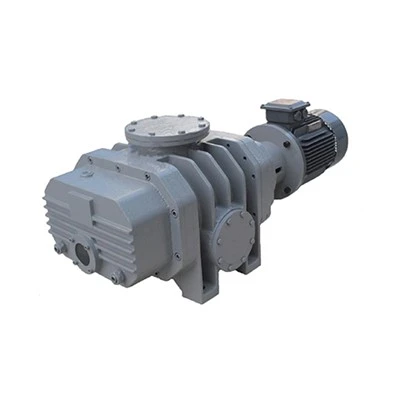
Let’s start with the most obvious divide: portability. Portable air compressors aren’t designed to be fixed in one spot, plain and simple. I remember a landscaper named Jake coming into the shop last spring, panicking because his old portable compressor died mid-job installing sprinklers for a dozen homes. He’d been trying to use a stationary model he borrowed from his brother, and it wouldn’t fit in the bed of his work truck, let alone power the 1-inch impact wrench he needed to dig the trench for sprinkler lines. That’s the first big point: portables are built to move. We stock models ranging from 1-gallon pancake compressors (light enough to hold in one hand, perfect for small car detailers or hobbyists) up to 30-gallon wheeled units that can handle a full day’s work on a construction site, no problem. They run on either electricity or gas—gas ones are lifesavers for remote jobs where there’s no outlet, like when we had a crew fixing a water tower on the outskirts of town last summer, using a 20-gallon gas-powered portable to run rivet guns and sanders.
But here’s what most casual buyers miss about portables: their trade-offs. You don’t get that mobility without sacrificing consistent power and volume. Take CFM—cubic feet per minute, the measure of how much air a compressor can deliver. A typical 20-gallon portable might put out 6 to 10 CFM at 90 PSI, which is enough for a tire change, a nail gun, or small spray painting, but not enough for a sandblaster or a large impact wrench that needs 15+ CFM. Their tanks are smaller, too—so you have to stop and wait for them to recharge every few minutes, which slows down long, continuous jobs. Last month, a construction foreman named Mike came to us complaining that his portable compressor kept dying halfway through framing a deck; he was trying to run a framing nailer that needed steady, continuous air, and his portable’s 10-gallon tank wasn’t cutting it. That’s where stationary compressors come in.
Stationary air compressors are built for one place only—they live in a garage, a warehouse, a manufacturing floor, or a dedicated utility room, hooked up to permanent power (or sometimes large gas lines for big industrial models). They’re heavier, bulkier, and don’t have wheels, but they crank out way more CFM and PSI, and they have huge tanks that let you run tools nonstop for hours. A 50-gallon vertical stationary compressor we sell for small auto shops puts out 18 CFM, enough to run a pair of impact wrenches and a paint sprayer at the same time, no recharging needed. For manufacturing customers, we regularly install 200-gallon horizontal units that power entire assembly lines, from robotic welders to packaging machines, all running off a single, fixed compressor. The other big plus for stationary models is efficiency: because they don’t have to be small, manufacturers can fit larger motors and better cooling systems, so they use less energy per CFM than most portables. I had a custom furniture maker come in last year to replace three separate portable compressors that were running up his power bill; switching to a single 80-gallon stationary unit cut his energy costs by 30%, and he doesn’t have to swap out compressors mid-job when he’s running a spray gun and a sander at the same time.
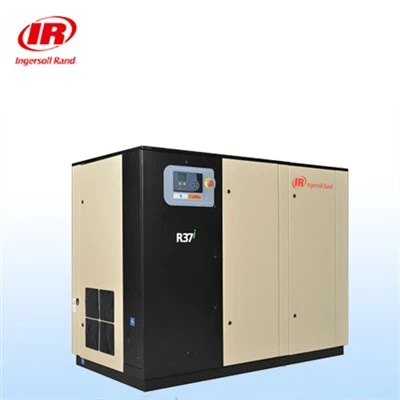
But wait—what about industrial rotary screw compressors, the big ones that look like metal tanks with motor housings? Yeah, those are stationary too, and they’re the workhorses for factories with 50+ workers all using air tools. I once visited a food packaging plant that uses a 500-horsepower rotary screw stationary compressor to power every part of their operation: from the conveyors that move cereal boxes to the labelling machines that put on expiration dates. They had no space for a portable unit anywhere in the plant, and even if they did, a portable couldn’t come close to the 200+ CFM that screw compressor puts out. The trade-off here is upfront cost and installation: stationary units are more expensive to buy and install, you need to have dedicated power lines (or gas lines) run to their spot, and you have to factor in maintenance like regular filter changes and tank inspections. Portables, on the other hand, are plug-and-play—you unload them from the truck, plug in the cord, and go, no installation needed.
Another difference that’s easy to overlook: maintenance and downtime. Portable compressors are smaller, so repairs are usually cheaper and faster, but they’re also moved around a lot, which means more wear and tear on hoses, cords, and motor mounts. Last month, a mobile tire technician came in with a portable compressor that had a cracked hose after bouncing around in his truck for two years; we replaced it in 20 minutes, and he was back on the road. Stationary compressors, because they’re fixed, last longer—we have some customers who’ve had the same 100-gallon stationary unit for 15 years, with only annual tune-ups. But when a stationary unit breaks, the downtime is way more expensive. If a factory’s rotary screw compressor goes down for even an hour, that can cost them tens of thousands of dollars in lost production. That’s why many stationary models have backup systems, or we offer service plans for our industrial customers that include 24/7 emergency repairs.
Let’s talk about use cases, because that’s what really matters. If you’re a homeowner doing occasional projects—like inflating pool toys, nailing up shelves, or repainting a bedroom—a small 1-gallon portable is perfect. It’s cheap, easy to store, and does the job. If you’re a mobile construction crew, a landscaper, or a mobile detailer who works at different sites every day, a wheeled portable compressor is non-negotiable. You can’t drag a 500-pound stationary unit up a ladder or load it into a work truck. But if you’re a small auto shop, a custom furniture maker, or a small manufacturing line that has a fixed workspace with multiple tools running at once, a stationary compressor is the smarter investment. Last quarter, we sold a 60-gallon stationary unit to a bike shop that had been using three portables to run their impact wrenches, spray booth, and frame bender. They told us it paid for itself in six months because they stopped having to replace portable compressors every year and didn’t lose time swapping out units mid-job.
I’ve seen customers make the wrong choice both ways. A carpenter friend of mine once bought a huge industrial stationary compressor for his small home workshop, just because he thought it was “bigger = better.” He ended up with a unit that took up half his garage, cost twice as much as he needed, and used way more power than his shop required. Another customer, a small construction company, tried to save money by using portables for their framing jobs, and ended up missing three deadlines because their compressors kept running out of air mid-day, leading to thousands of dollars in penalty fees. That’s why when I work with a new customer, I don’t just show them specs—I ask about their typical job, how many tools they run at once, their workspace, and their budget.
If you’re still trying to figure out which is right for you, here’s a quick recap to simplify it: portable = mobile, small, low upfront cost, good for single tools or occasional use; stationary = fixed, high power, continuous use, better for multiple tools or long-term fixed operations. But at the end of the day, the best choice is the one that fits your specific needs, not just the specs that sound impressive on a sales sheet.
If you’re ready to stop guessing and get a compressor that works for your business, our team of air compressor experts can help. We’ve helped hundreds of customers—from one-person operators to large manufacturing facilities—find the right solution, and we offer flexible pricing, installation support, and ongoing service for every model we sell. Don’t waste time and money on a compressor that doesn’t fit your workflow—reach out to us to discuss your needs and get a personalized recommendation today.
Air Compressor Parts References:
- Compressed Air and Gas Institute. (2022). Portable vs. Stationary Compressors: Operational Differences and Application Guidelines. CAGI Technical Bulletin 104.
- Occupational Safety and Health Administration. (2021). Safety Standards for Compressed Air Equipment in Workplaces. OSHA 29 CFR 1910.
- Gardner Denver. (2023). Air Compressor Technology Guide: Portability vs. Stationary Performance. Industrial Equipment Resource Report.
- Consumer Product Safety Commission. (2020). Small Air Compressor Safety and Usage Recommendations for Home and Professional Users. CPSC Publication 510.
Suzhou Ruiqi Intelligent Equipment Co., Ltd.
As one of the most professional air compressor manufacturers and suppliers in China, we also support custom service. As we have world-leading production equipment and strong manufacturing capabilities, we warmly welcome you to buy high quality air compressor made in China here from our factory. Contact us for pricelist.
Address: No. 1729, Zhongshan South Road, Wujiang District, Suzhou City, Jiangsu Province, China, 16th Floor
E-mail: wts476626494@126.com
WebSite: https://www.ruiqicomp.com/
