If you’ve ever grabbed a snack from your pantry, peeled back a tamper-evident easy-tear label to access the product inside, and noticed that the edge felt brittle or the tear strips refused to separate evenly, you’ve probably wondered: how long do these labels actually last? As a supplier of easy-tear labels that’s worked with food brands, cosmetics manufacturers, pharmaceutical companies, and even e-commerce retailers for over a decade, this is one of the most common questions I get from new and existing clients alike. The answer isn’t a one-size-fits-all number—shelf life depends on a mix of material science, storage conditions, and the specific environment the label will live in during its own shelf life and the product’s lifecycle. Let’s break this down, from the materials we choose to the real-world conditions that make or break label performance. Easy-tear Label
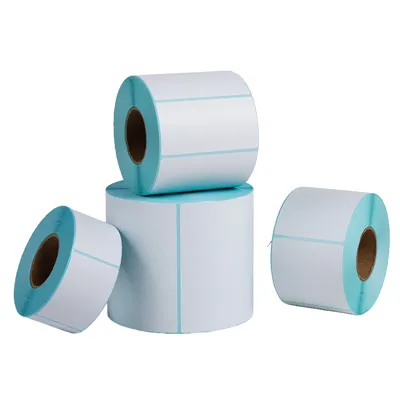
First, it helps to understand what makes an easy-tear label different from a standard pressure-sensitive adhesive label. At their core, these labels are engineered with a built-in tear initiation feature—usually a notch, perforation, or micro-scored line along the edge that lets you separate the label in one clean pull, no scissors required. That delicate scoring or weakened line is the first thing that’s vulnerable to degradation over time, because it’s a manufactured weak point, not just a raw edge of material. The base material of the label (paper, polyester, vinyl, or specialty films) and the adhesive that sticks it to the product’s packaging are the other two critical components that impact shelf life.
Let’s start with the material because that’s where we, as a supplier, tailor our offerings to different use cases. For example, paper-based easy-tear labels are the most common for food products like cereal boxes, snack bags, and canned goods because they’re affordable, print well, and tear easily. But paper is a hygroscopic material—it absorbs and loses moisture depending on the air around it. If a paper label is made from uncoated or minimally coated paper, it can start to warp, the perforations can close up, or the paper itself can become too brittle or too soft when stored in high humidity or extreme dryness. I once had a client who stored 50,000 paper easy-tear labels in a warehouse in the southeastern U.S., where humidity hovers around 75% year-round. When they used them six months later, half the labels had perforations that had filled in with moisture, so the tear strips wouldn’t separate cleanly. That’s not a defect in the label—it’s a mismatch between the material’s properties and the storage environment. Polyester and vinyl labels, on the other hand, are plastic films, so they don’t absorb moisture. Their shelf life is far less impacted by humidity, but they can become brittle if exposed to consistent cold (like being stored in a freezer warehouse) or extreme UV light if left out in direct sun for long periods.
Adhesive is the next big piece of the puzzle. Easy-tear labels have to do two things: hold fast to packaging for months or years, and peel away when you need them, without leaving residue or tearing the packaging itself. Pressure-sensitive adhesives (PSAs) are the standard here, and they come in acrylic, rubber-based, and silicone varieties—each with its own shelf life timeline. Acrylic adhesives are the most durable for long-term storage; they don’t degrade as quickly as rubber-based ones, which can break down, turn yellow, or lose their tack after 12 to 18 months if stored incorrectly. Silicone adhesives are for specialty use, but they’re not ideal for long shelf life because they can transfer to packaging over time, especially in high temperatures. As a supplier, we test every batch of adhesive we use for peel strength, tack, and resistance to aging, but even the best adhesive will fail if the label isn’t stored properly before application.
Now, let’s get to the actual numbers, based on real testing and industry data that we rely on for every client. For labels stored in ideal conditions—temperature between 60°F and 75°F (15°C to 24°C) and relative humidity between 30% and 50%—most standard easy-tear labels have a shelf life of 18 to 24 months from the date of manufacture. That doesn’t mean they’ll stop working on day 730, but it does mean their performance starts to decline after that window. After 24 months, paper labels might start to show minor brittleness, and the perforations can become slightly dull, making it a little harder to get that clean tear. Plastic labels will retain their flexibility longer, but their adhesive’s peel strength might drop by 10 to 15% after two years, which could be a problem for products that need tamper evidence over a long period.
But here’s the catch: most products don’t use labels in ideal conditions. If a label is stored in a warehouse that’s too hot (over 90°F/32°C) or too cold (below 40°F/4°C), that shelf life window shrinks significantly. High heat can cause the adhesive to break down, making labels lose tack within 12 months, while extreme cold can make paper or plastic labels brittle so that the tear strip snaps instead of pulling cleanly. Humidity is even more impactful: if a label is stored in an environment with 70%+ humidity, paper labels can start to degrade in as little as 6 months, as we saw with that cereal client of mine a few years back. I’ve also worked with a pharmaceutical client that stores labels in a climate-controlled warehouse, and their labels still perform perfectly 30 months after manufacture, because we matched their material to their storage conditions. That’s the key: as a supplier, we don’t just send labels and hope they work—we guide clients on how to store them to maximize shelf life.
Another factor that many people overlook is the product’s own shelf life and packaging. If a label is applied to a product that has a short shelf life—like a yogurt or a fresh snack—the label doesn’t need to last as long as a label applied to a canned good that’s meant to sit on a shelf for two years. For products like cosmetics or supplements that might be stored in a consumer’s bathroom, where humidity is high, we often recommend vinyl easy-tear labels over paper, because they resist moisture better. For e-commerce packages that are shipped across the country and might sit in a hot truck for days, we use acrylic adhesive that’s formulated to withstand temperature fluctuations, so the label stays on and tears easily when the customer opens it.
Testing is non-negotiable for us as a supplier, because “shelf life” isn’t just a guess—it’s measured by standardized tests that simulate real-world conditions. We run accelerated aging tests on every new label we develop: we expose samples to high temperature and humidity for a set number of days, then test their tear strength, perforation integrity, and adhesive performance. An accelerated aging test that simulates 18 months of ideal conditions takes about 10 days in our climate chamber, which lets us predict how a label will perform over time without waiting years for results. We also do real-world testing with clients: we send them small batches of labels, which they apply to their products, and track performance over time to adjust our formulations as needed.
I should also address a common misconception: a label’s shelf life is not the same as the product’s shelf life. A lot of brands ask us, “Can your label last as long as our product?” and the answer is usually yes—if we select the right materials and storage conditions. For long-lasting products like canned food or industrial parts, we offer a heavy-duty polyester label with a reinforced tear strip and a high-strength acrylic adhesive that’s tested to last up to 5 years in ideal conditions. We’ve had clients use these labels on military surplus parts that are stored in climate-controlled depots, and they still tear cleanly after 4 years, no issues. For short-term seasonal products, like holiday treats or summer snacks, we can use a more affordable paper label that works perfectly for 12 to 15 months, which is more than enough time for the product to be sold and consumed.
What happens when a label exceeds its shelf life? We’ve seen a range of issues, from minor inconveniences to actual product defects. Most commonly, the tear strip won’t separate evenly, so customers have to use a knife or scissors to open the package, which leads to complaints. In more serious cases, the adhesive can fail, so the label falls off during shipping or storage, risking tamper evidence. For pharmaceutical products, a lost label or a torn label that exposes the inner packaging could be a regulatory issue, which is why we work closely with pharma clients to ensure their labels meet FDA standards for shelf life performance. We even offer label traceability, so if a client has an issue with a batch, we can track exactly when it was manufactured, what materials were used, and the storage recommendations we provided.
So, how do brands maximize the shelf life of their easy-tear labels? First, store them in a climate-controlled space, away from direct sunlight, extreme temperatures, and high humidity. Keep them sealed in their original packaging until you’re ready to apply them—exposing them to air for long periods can impact their performance. Test small batches before ordering large quantities: every supply chain has different conditions, so what works for another brand might not work for yours. And work with a supplier that will help you match the right label material and adhesive to your specific product and storage needs, instead of just offering a one-size-fits-all option.
At the end of the day, easy-tear labels are a small part of a product’s packaging, but they make a huge difference in the customer experience. No one wants to struggle to open a package of food after a long day, or deal with a label that falls off a valuable product during shipping. As a supplier, we spend thousands of dollars every year on material testing, climate chamber trials, and real-world performance tracking just to make sure our labels hold up when they’re needed. The shelf life isn’t a random number—it’s a balance between material science, storage conditions, and the unique needs of the product they’re attached to.
If you’re planning to source easy-tear labels for your brand, or if you’ve had issues with label performance in the past, we’re here to help. We can walk you through our material options, recommend the right label for your product, and even provide samples to test in your own supply chain conditions. Reach out to our team to discuss your specific needs and get a quote tailored to your project.
Foldable Label References
- Pressure-sensitive adhesive shelf life testing standards. (2021). ASTM International.
- Hygroscopic properties of paper-based packaging materials. (2019). Journal of Packaging Science and Technology.
- Accelerated aging protocols for flexible packaging labels. (2022). International Society of Packaging Engineers.
- Performance characteristics of polyester and vinyl labeling films for long-term storage. (2020). Packaging Technology and Science.
Huizhou Huilong Printing Company Limited
As one of the most professional easy-tear label manufacturers in China, we have world-leading production equipment and strong manufacturing capabilities. Please feel free to buy bulk easy-tear label in stock here from our factory. Also, pricelist is available.
Address: Xin’er Group, Xiamazhuang, Huicheng District, Huizhou City, Guangdong Province
E-mail: huilong278@163.com
WebSite: https://www.huilonglable.com/
