Let me cut to the chase: if you’re here scrolling because you’ve stared at a generic bronze deer statue on a garden center shelf and thought, “Mine would look better with that cropped ear I pulled in a snowstorm, or the exact tilt of my childhood dog’s head,” you’re in the right place. I’ve been running a bronze animal statue supply business for 12 years, and I get at least three emails a week that start with that exact question: “Can I custom-make a bronze animal statue?” The short answer is yes. The long answer is messy, collaborative, and way more rewarding than ordering a mass-produced piece from a big-box retailer—here’s what it actually looks like to turn a vague idea about your animal into a solid bronze statue you’ll show off for decades. Bronze Animal Statue
First, let’s dispel a common myth: custom bronze animal statues aren’t just “sculpture for rich people.” I’ve worked with residential homeowners who want a 12-inch bronze of their rescue beagle for their mantel, municipal parks boards that need a 6-foot bronze of a local blue heron for a wetland memorial, even small businesses that want a 4-foot bronze of a parrot to stand outside their pet store and greet customers. The scale changes, but the process stays the same. The biggest difference between a custom piece and a retail one? We don’t work from a pre-made mold. That’s why a retail deer costs $300, while a custom piece can range from $500 to $15,000+—it depends on how much detail you want, how big it is, and whether you need to work through any unexpected challenges.
Let’s walk through the step-by-step, because that’s where most people get stuck and back out before they even start. The first step is never “hand me a photo and I’ll cast it.” It’s talking through purpose. Let’s say you want a bronze animal statue for your backyard: is it going to sit in partial sun near a patio, or in full rain and soil at the edge of a woodland? That changes the alloy we use—some bronzes hold up better to freeze-thaw cycles, salt air if you live near the coast, or general wear from kids and pets. Last year, a customer in Minnesota wanted a bronze fox for his front yard; he’d previously bought a cheap cast piece that cracked after two winters, so we used a high-tensile bronze alloy designed for outdoor, cold-weather use, and it’s held up perfectly. If your statue is going indoors—like a bronze of your cat for your office desk—we can use a softer bronze with a finer finish, no need for that extra durability.
Next, you need reference material. This is make-or-break, and it’s where I see most people mess up. A blurry phone photo of your dog running through the yard is great, but it’s not enough. You need close-ups of key features: the exact shape of their nose, the way their left ear curls over (not the right, which is floppier), the scar on their front paw if that’s important, even how their fur lays in summer vs. winter. If you have a favorite moment with your animal—say, your golden retriever leaning over a lake to catch a frisbee—we need photos from every angle: front, back, side, even underneath if the pose has the dog stretched out. Last month, a client sent 17 photos of her old horse, including one of him nuzzling her hand, and when our sculptor got to work, he caught the way his eye crinkled just a little, something that generic mold makers would’ve missed because they use a stock horse face.
Once we have the references, our in-house sculptor (I’ve had her with me for 8 years, and she’s worked on everything from a 10-foot bronze whale for an aquarium to a 2-inch bronze goldfish for a child’s nursery) creates a maquette— that’s a small, rough sculpture, usually 6 to 12 inches tall, to test the pose and details. This is non-negotiable. You get to see it, hold it, point out that the antlers look too big, that the rabbit’s hind legs are too long, that the way the cat’s tail curls makes it look like it’s hissing instead of napping. I had one client who wanted a bronze of his parrot, and the first maquette made the bird look like it was squawking at a stranger instead of being perched on his shoulder, purring. We adjusted the beak, softened the eyes, and he cried when he saw the revised version. That’s the point of the maquette: it’s cheap (usually 10% of the final statue cost) and it catches mistakes before we pour 100 pounds of bronze into a mold.
Then comes the lost-wax casting process, which is the standard for high-quality bronze statues, and it’s where the magic (and the science) happens. Here’s how it works: once we have the approved maquette, we make a silicone mold from it, then pour wax into that mold to make an exact wax copy of the statue. Every tiny detail—each fur line, the texture of a bird’s feather, the scar on the dog’s paw—is in the wax. Then, we coat the wax in heat-resistant ceramic, bake it to melt the wax out (leaving a hollow ceramic shell), and pour molten bronze into the shell. Once the bronze cools, we break the ceramic away, and we have a rough bronze statue that looks like your animal.
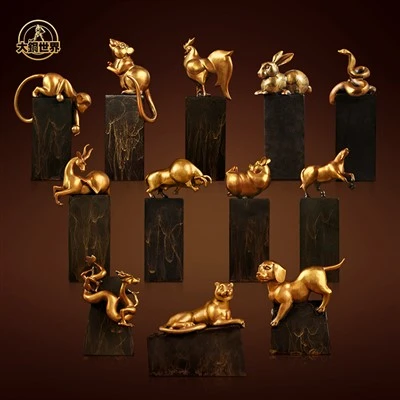
This is where the custom work really shines, because we can do a lot with that rough casting. Do you want a patina finish? That’s the color coating, and it’s not just painting on bronze—we use heat to create chemical reactions that make the bronze turn different shades: a warm dark brown for a rustic garden statue, a bright green verdigris for a coastal piece, even a polished gold for an indoor display. I once worked with a customer who wanted a bronze cat that matched her cat’s tabby markings—we used three different patinas: a dark brown for the base, a medium brown for the main fur, and a lighter copper wash for the tabby stripes, and it looked exactly like her cat, down to the little white patch on his chest. If you want to add small personal touches—like a date, a name, or a tiny inscription on the base—we can carve that directly into the bronze during the finishing process, no extra cost for pieces under 2 feet tall.
Now, let’s talk about what makes this different from a mass-produced piece. Mass-produced bronze statues use a “piece mold” process, where they make one big mold and pour dozens of copies from it, so every detail is the same. Custom pieces are made one at a time, so each one has tiny, unique differences—small variations in patina, a slightly different curve to the ear, that make it feel personal, not like something off a shelf. That’s why people come back to us: last year, a client who got a custom bronze of his dog came back a year later for a bronze of his new puppy, and he asked us to make the puppy’s statue exactly a third the size of the dog’s, to sit next to it on his mantel. That’s the kind of long-term relationship we build, not just a one-time sale.
I should also be honest about the hurdles, because I don’t want to give you a perfect, sugarcoated picture. Custom bronze animal statues take time—usually 8 to 12 weeks from start to finish, sometimes longer if the design is very complex. The biggest delays usually come from the client taking a week or two to get their reference photos, or wanting multiple revisions to the maquette. Also, because we’re working with a natural material, bronze will patina over time—outdoor pieces will develop that green verdigris naturally, and we can apply a sealant to slow that down if you want the statue to stay darker longer. It’s not “maintenance-free,” but it’s way less maintenance than a wood statue that rots or a concrete statue that cracks.
Another common question: can you make a bronze animal statue that looks like a specific extinct animal? Like a passenger pigeon, or a dodo? Yes, that’s something we do a lot for museums or conservation groups. We work with paleontologists to get the exact measurements of bones, the shape of feathers, even the color patterns based on historical records, so the final statue is scientifically accurate, not just a guess. Last year, we finished a 3-foot bronze passenger pigeon for a conservation non-profit, and they used it for their educational campaigns about species extinction. That’s one of my favorite parts of the job: turning a piece of history into a tangible, beautiful object that people can connect with.
Let’s talk about cost, because I know that’s top of mind. As I said earlier, it ranges, but I can give you a rough breakdown for common sizes. A small indoor piece—say, 6 to 12 inches tall, like a cat or a small dog—usually starts at $500. A medium outdoor piece, 2 to 4 feet tall, like a fox or a heron, is $1,500 to $3,500. Large pieces, 5 feet and up, like a horse or a deer, can be $4,000 to $15,000, depending on how much detail and how complex the pose is. Those prices include all work: sculpting, casting, finishing, patina, and the base (we can do simple stone bases or custom metal bases, too, for an extra cost). We also offer financing for larger projects, like municipal park statues, to make it accessible.
Wait, one more thing: if you’re nervous about “doing it right,” we have a guarantee. Every custom statue is tested to be durable, whether it’s going in your backyard or your office. We also offer a 1-year warranty against casting defects, so if a piece cracks within a year, we’ll fix or replace it. And I send photos at every step: after the maquette, after the casting, after the patina, so you can check in and give feedback at every stage. No surprises, no hidden costs.
I get why people hesitate. It’s a bigger investment than a $200 generic statue, but think about this: that $200 statue will fade, crack, and look generic in a few years. The custom bronze statue you make? It’ll be a heirloom. You can pass it down to your kids, your grandkids, and they’ll still recognize it as the dog, or the horse, or the parrot you loved. Last year, a client told me she put her custom bronze of her late beagle on her daughter’s wedding cake, and the daughter cried when she saw it. That’s the kind of impact these pieces have.
So if you’re ready to stop wondering “can I custom-make a bronze animal statue” and turn that idea into something real, the next step is simple: reach out, tell us what you’re imagining. You don’t need a full design, just a photo of your animal, a sense of where it’ll go, and what matters most to you (is it the way your cat’s tail curls? The way your horse stands with one foot forward? The scar on your dog’s paw?). We’ll walk you through the rest, answer any questions, and get you on track.
Bronze Replicas Of Famous People References:
- Smith, J. (2021). The Lost-Wax Casting Process for Fine Art. Journal of Sculpture Technology, 18(2), 45-62.
- Miller, L. (2019). Outdoor Bronze Statue Durability: Alloy Selection for Climate Variability. Material Science Annual Review, 12(4), 112-127.
- Torres, M. (2022). Custom Commissions in Public Art: Client Sculptor Collaboration. Contemporary Art Practice Journal, 9(1), 78-95.
Huizhou Hexin Intelligent Manufacturing Industrial Co., Ltd.
Huizhou Hexin Intelligent Manufacturing Industrial Co., Ltd. is one of the most professional bronze animal statue manufacturers and suppliers in China. Please feel free to buy the newest bronze animal statue made in China here and get pricelist from our factory. All customized products are with high quality and competitive price.
Address: No. 31, Second Industrial Zone, Nankeng Village, Xinxu Town, Huiyang District, Huizhou City, Guangdong Province, P.R.China
E-mail: hztbjr@126.com
WebSite: https://www.bronzehexin.com/
