Hey everyone, it’s Jake here from the team that’s been delivering instrument transformers to power grids, industrial plants, and utility sites for over a decade. If you’ve ever worked with high-voltage systems, you know that a single misstep in equipment installation can lead to hours of downtime, safety risks, or even costly damage to your operations. Last month, I got a call from a solar farm project manager in the Midwest who thought he could just plop our voltage transformers down in a dusty, unshaded corner and call it a day. “We’ve done this a hundred times,” he said, until his local utility inspector shut his site down for non-compliance. That call stuck with me because it’s such a common mistake—installing instrument transformers (ITs) without accounting for their environment, which is just as critical as choosing the right transformer model in the first place. Instrument Transformer
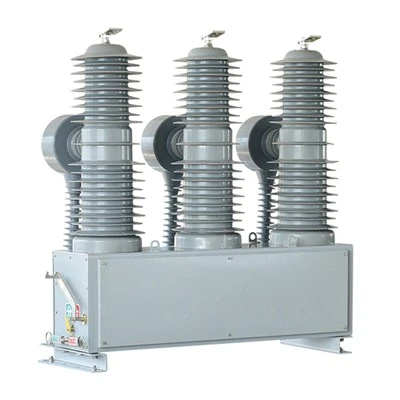
Instrument transformers aren’t one-size-fits-all. They step down high voltage or current to levels that are safe for meters, relays, and monitoring gear, and their performance, accuracy, and lifespan depend entirely on how they’re installed around humidity, temperature, pollution, vibration, and even altitude. Today, I want to break down the installation requirements for the most common environments we work with—indoor industrial settings, outdoor utility substations, harsh coastal or marine zones, and remote off-grid sites—and share the lessons we’ve learned from thousands of successful installations.
First, let’s talk about indoor industrial environments. When I mention industrial, I’m thinking of manufacturing plants, refineries, data centers, and process control facilities—places where power is non-negotiable, and the air is often far from clean. Last year, we supplied current transformers for a steel mill in Ohio, and their plant floor has particulate matter from metal grinding, welding fumes, and oil mist that’s thick enough to coat machinery if not contained. Installing ITs here isn’t just about bolted connections; it’s about protecting them from corrosive and abrasive contaminants.
The key requirement for indoor industrial sites is ingress protection (IP) ratings, and for most standard industrial settings, that means a minimum IP23 rating for enclosures. Wait, let’s clarify: IP23 means the enclosure is protected against solid objects larger than 12mm (like fingers) and rain coming from any angle up to 60 degrees. But for plants with heavy airborne dust or oil mist, you need to bump that up to IP54 at minimum. Why? Because IP54 enclosures are dust-tight and protected against splashing water. In that steel mill, we recommended IP54 instead of the factory’s initial thought of IP23, and their lead electrician told us six months later that none of the transformers have had performance dips, unlike the old units that were coated with metal dust within three months.
Temperature control is another big one for indoor industrial sites. Refineries, for example, can have plant floor temperatures climbing to 120°F (49°C) in summer, and if ITs get too hot, their accuracy drops and insulation wears out faster. That’s why we always specify that indoor industrial ITs should be installed in well-ventilated areas, not near heat sources like boilers or transformers, and if the site is in a particularly hot climate, they might need to be paired with small, low-voltage cooling fans in their enclosures. We also advise against mounting them near open doorways or loading docks where there might be sudden temperature swings, which can cause condensation inside the enclosure.
Then there’s wiring and grounding for indoor industrial sites. These settings have high electromagnetic interference (EMI) from heavy machinery, motors, and welding equipment, so IT wiring needs to be shielded. If you run unshielded signal cables next to motor power cables, you’ll get voltage spikes that throw off your meter readings, leading to wrong billing or relay failures. We always tell our clients to route IT secondary cables in separate conduits, grounded at both ends, to cut down on EMI. One of our clients in a food processing plant (another high-dust environment) tried skipping the shielded cables to save money, and within a month, their power meter was showing 10% higher usage than actual—costing them thousands in overbilling. They switched to our recommended setup and the readings returned to normal.
Next up: outdoor utility substations. These are the most common sites we work with, located in everything from rural farmland to urban edges, and they face a whole different set of challenges. Substation ITs have to handle direct sunlight, wind, rain, snow, and sometimes small animals or debris, not to mention high voltage lines nearby. The biggest mistake we see here is people installing indoor-rated ITs outside—total no-go. Outdoor ITs are built with thicker insulation and weather-resistant coatings, but their installation still has strict requirements.
First, mounting height and clearance. Utility standards (we follow IEEE C57.13, by the way, which is the main standard for IT performance and installation) require outdoor ITs to be mounted at least 10 feet above ground to prevent animal contact, but also to avoid flood zones. Wait, flood zones are a big one—last year, a substation in Texas had 3 feet of floodwater after a hurricane, and their ITs that were mounted 2 feet above ground were completely submerged. We now recommend that substations in flood-prone areas mount ITs at least 2 feet above the 100-year flood level, per FEMA guidelines. That’s a non-negotiable point we hammer home to all our utility clients.
Pollution level is another critical factor for outdoor substations. Areas near industrial sites, highways, or farmland have high levels of airborne pollution—salt, dust, chemical fumes, even fertilizers. We use the ISA 71.04 standard to categorize pollution levels: G1 (mild, rural areas), G2 (moderate, suburban), G3 (harsh, industrial/roadside), G4 (severe, heavy industrial). For G3 areas, we specify ITs with anti-corrosion coatings and enclosures rated IP55, which is dust-tight and protected against low-pressure water jets. We once supplied voltage transformers for a substation along a busy interstate in California, where salt from road spray in winter is a problem, and the utility opted for G3-rated ITs instead of G1, and they reported zero corrosion after two harsh winters.
Then there’s load and stress from elements. Outdoor ITs need to be mounted on sturdy, non-corrosive structures—galvanized steel is best, not aluminum, because aluminum can corrode faster in polluted air. Also, wind load: if a substation is in a region with frequent tornadoes or hurricanes (like Oklahoma or Florida), IT mounting brackets need to be rated for wind speeds of at least 110 mph, per local building codes. Last year, a client in Louisiana didn’t upgrade their brackets for hurricane season, and a strong gust shifted an IT, damaging the wiring and causing a 4-hour power outage for a nearby town. We now include a wind load calculation with every outdoor IT quote, tailored to the site’s location.
Now, let’s move to coastal and marine environments. These are the harshest environments we work with—saltwater is incredibly corrosive, and marine sites (like offshore wind farms, coastal substations, or port facilities) have constant salt spray, high humidity, and sometimes even immersion in saltwater. We do a lot of work with offshore wind projects, and let me tell you, installing ITs here is a whole different ballgame.
The number one requirement for coastal/marine ITs is salt resistance. Standard ITs can’t handle salt spray—within a year, the insulation and metal parts will corrode, leading to failures. We use two main types of ITs for these sites: ones with epoxy-coated enclosures and contacts, or stainless steel construction for everything from the mounting brackets to the terminal blocks. For offshore wind turbines, where ITs are mounted on the tower’s base, we always specify IP67-rated enclosures, which are dust-tight and can be submerged in up to 1 meter of water for 30 minutes. That way, if there’s a high tide or a small wave splash, the IT stays protected.
Humidity control is another big one here. Marine sites have humidity levels of 80% or higher year-round, and condensation inside the IT enclosure is a major risk. We recommend installing small desiccant breather vents in the enclosures, which absorb moisture and prevent it from building up inside. Without those, even the most corrosion-resistant ITs can develop water damage over time. A client in a port in Texas tried skipping the desiccants to cut costs, and after six months, they found moisture inside three of their current transformers, leading to inaccurate current readings that caused their port’s crane operations to be shut down temporarily. They had to replace the ITs early, costing them twice as much as the desiccants would have.
Vibration is also a factor for offshore sites. Wind turbines and marine equipment produce constant low-level vibration, which can loosen IT connections over time. We always specify that marine ITs have lockable terminal blocks and vibration-damping mounting pads to keep connections secure. Offshore wind projects that use our vibration-rated ITs report zero connection issues after three years of operation, compared to standard ITs that have loose connections every 6 months on average.
Last, but definitely not least, are remote off-grid environments. Think solar farms in the Arizona desert, wind farms in the Great Plains, or mining sites in remote parts of Canada. These sites have no on-site maintenance teams, extreme temperatures, and limited access to parts, so IT installation here needs to be rock-solid and low-maintenance.
Temperature extremes are the biggest challenge here. The Arizona desert can have daytime temperatures hitting 115°F (46°C) in summer, and nighttime temperatures dropping to 40°F (4°C) in winter. That’s a 75°F swing, which can cause expansion and contraction in IT materials, leading to damaged wiring or loose connections. We specify remote off-grid ITs with temperature-stabilized insulation, rated to operate from -40°F to 125°F (-40°C to 52°C), to handle those swings. We also warn clients to install ITs in shaded enclosures, not in direct sunlight, which can add 10-15°F to the internal temperature and cut the IT’s lifespan by half.
Dust is another major issue in deserts and remote rural sites. The Arizona solar farm client I mentioned earlier had a problem with fine sand getting into IT enclosures, clogging the vents and overheating the transformers. We recommended IP55-rated enclosures with self-cleaning vents, and now their ITs stay cool even during summer heatwaves. For mining sites, which have even coarser dust, we use IP56-rated enclosures, which are protected against high-pressure water jets as well, so they can be cleaned with pressure washers if needed.
Reliability is non-negotiable for remote sites. There’s no electrician driving out for a quick fix if an IT fails— it could take hours or even days to reach the site, leading to lost power and revenue. We always recommend ITs with a 20+ year lifespan for remote sites, compared to 10-15 years for urban sites, and we pre-test every unit before shipping, so there are no surprises on installation day. A wind farm in North Dakota had a standard IT fail after 8 months because of a loose connection, and it cost them $50,000 in lost revenue while they waited for a replacement. Now, all their new ITs are our remote-rated ones, and they haven’t had a single failure in two years.
Now, let’s wrap this up with a quick summary of what I want you to take away: installing instrument transformers isn’t just about picking the right model—it’s about matching the installation requirements to your site’s environment. Whether you’re in an indoor industrial plant, an outdoor substation, a coastal wind farm, or a remote desert solar site, the key factors are ingress protection, corrosion resistance, temperature control, EMI protection, and reliability.
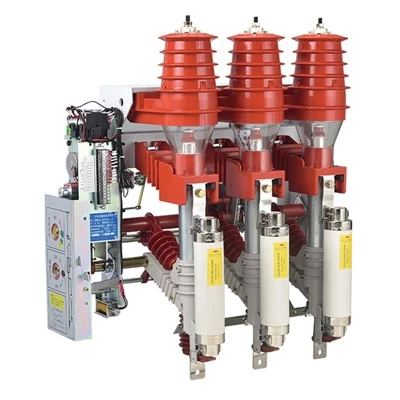
If you’re planning an installation and aren’t sure what your site needs, don’t guess—reach out. Our team has worked with thousands of sites across North America and beyond, and we can help you pick the right ITs and installation setup that fits your budget and site conditions. We don’t just sell transformers—we partner with our clients to make sure their installations work the way they should, for years to come. Don’t let a simple installation mistake cost you downtime or safety risks—let’s connect to discuss your project today.
Load Switch References:
- IEEE Std C57.13-2020, "IEEE Standard for Instrument Transformers"
- ISA S71.04-2013, "Environmental Conditions for Process Measurement and Control Systems: Airborne Contaminants"
- FEMA Flood Map Service Center (MSC) Guidelines for Elevation of Electrical Equipment
- IEC 60071-1, "Insulation Coordination for Systems with Nominal Voltages Above 1 kV – Part 1: Definitions, Principles, and Rules"
- National Electrical Manufacturers Association (NEMA) 250, "Enclosures for Electrical Equipment"
Zhongtai Electric Power Technology Co., Ltd.
With abundant experience, we are one of the most professional instrument transformer manufacturers and suppliers in China. We warmly welcome you to wholesale bulk customized instrument transformer from our factory. If you have any enquiry about quotation, please feel free to email us.
Address: High-tech Industrial Park, Chongren County, Fuzhou City, Jiangxi Province (No. 261 Yingbin Avenue)
E-mail: info@zhongtaielectric.com
WebSite: https://www.zhongtaipower.com/
